

Is a Digital Illustration Course Enough to Become a Game Artist in 2026?
16 April, 2026
Thinking of becoming a game artist? Find out if a digital illustration course is enough, plus skills, tools, and portfolio tips you need.
Not everyone who loves drawing starts with a clear career plan.
Some people enjoy sketching characters. Others lean toward storytelling, digital painting, or visual design.
And somewhere along the way, a question begins to surface, “can this become something more than just a hobby?”
That’s usually when structured learning enters the picture. A digital illustration course often feels like the most natural next step. It promises direction, skill development, and a way to take creativity more seriously.
But here’s where things get complicated.
Creative fields don’t follow a single path. Unlike traditional careers, there isn’t one defined route from learning to earning.
You might start with illustration, discover concept art, or become curious about opportunities in gaming-without fully understanding how these roles connect or differ.
This confusion is more common than it seems. In fact, many aspiring artists struggle to differentiate between paths like concept art and illustration, even though they lead to very different careers.
At the same time, search trends like “concept art classes near me” or “digital illustration course” reflect a growing interest in creative careers, but not necessarily clarity.
So the real question isn’t just what should you learn?
It’s: Where can that learning actually take you and is it enough to get you there?
Starting with Illustration, But Where Does It Lead?
For many beginners, illustration is where everything begins.
It’s accessible, expressive, and immediately rewarding. You learn how to bring ideas to life visually, whether that’s through characters, environments, or stylised artwork.
A structured digital illustration course can sharpen these fundamentals, helping you build confidence and consistency in your work.
But as your skills improve, a new question often replaces the old one:
What can I actually do with this skill set?
This is the point where creative exploration turns into career consideration.
Some artists continue down the path of illustration, working in publishing, advertising, or freelance commissions. Others start leaning toward more design-oriented roles, where artwork is not just meant to be visually appealing, but functional within a larger process.
That’s where paths like concept art begin to emerge.
Unlike illustration, concept art is less about finished visuals and more about problem-solving through design.
It involves creating multiple iterations, exploring ideas, and shaping the visual direction of a project before it moves into production.
If you’re still navigating this shift, this breakdown on Concept Artist offers a closer look at how the role actually works in practice in our comprehensive blog.
5 Key Differences Between Concept Art And Illustration
At the same time, some artists find themselves drawn toward interactive mediums like games, where art becomes part of an immersive experience rather than a standalone piece. This introduces an entirely different dimension to creative work, one that goes beyond illustration alone.
And this is where many learners start to realise something important:
Illustration builds the foundation, but it doesn’t always define the destination.
How does Art Become Part of a Pipeline?
As long as you’re creating for yourself, the focus is simple-make your work look good.
But the moment you start thinking about working in an industry, the rules begin to change.
Art is no longer just about expression. It becomes part of a process.
In fields like gaming, animation, and entertainment design, artists don’t work in isolation. Their work feeds into a larger pipeline, where designers, developers, and 3D artists all rely on each other to bring a final product to life.
This is where roles start to diverge more clearly.
A concept artist, for instance, is not just creating beautiful visuals; they are designing ideas that others will build upon. Their work needs to be clear, adaptable, and production-friendly. Multiple iterations, variations, and functional design thinking become part of the job.
To explore in more depth in the Concept Artist guide, especially when it comes to real-world expectations in our blog
Concept Artist: The Creative Mind Behind Visual Worlds
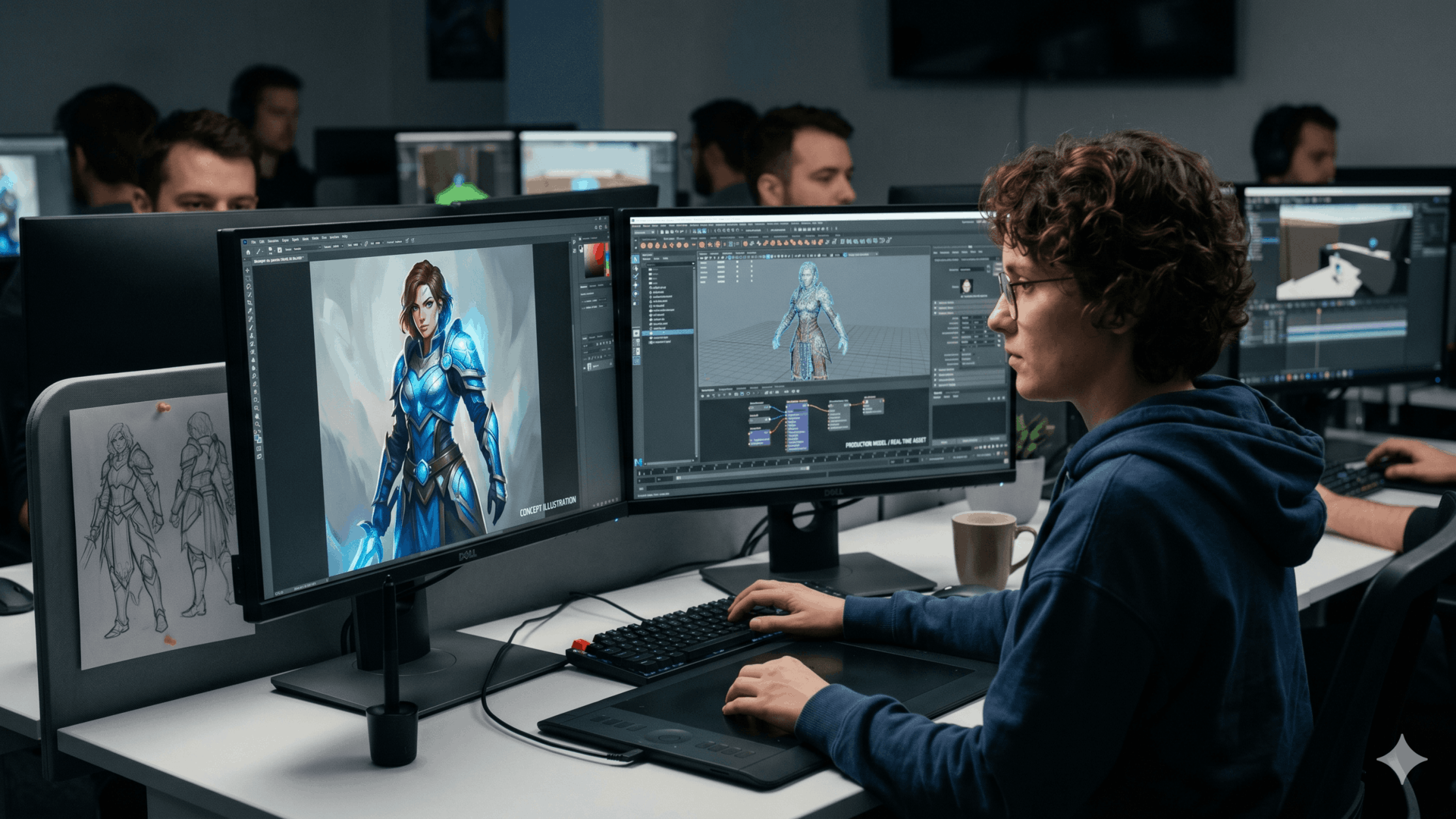
Similarly, if you look at the role of a Game Artist, the scope expands even further. Game artists often work with 3D models, textures, engines, and technical constraints. Their work isn’t just viewed, it’s experienced interactively by players.
This shift, from creating standalone artwork to contributing within a system, is where many aspiring artists feel unprepared.
Because while a digital illustration course helps you build strong visual fundamentals, it doesn’t always expose you to:
- collaborative workflows
- production pipelines
- technical tools used in studios
- how artwork translates into real assets
And without that exposure, even a strong portfolio can feel disconnected from what studios are actually hiring for.
And this is where many artists begin to realise that improving their craft alone isn’t enough, they also need to understand where that craft is applied.
What Studios Actually Look For (And Why Many Portfolios Fall Short)
By the time most learners start building a portfolio, they’ve already invested significant time improving their art. The work looks polished, the style is developing, and there’s a sense of progress.
But when it comes to applying for roles, the response is often… silence.
Not because the work isn’t good, but because it’s not aligned.
Studios don’t just evaluate how well you draw. They look at how well your work fits into the role you’re applying for.
For example:
- A concept artist portfolio is expected to show process, ideation, and problem-solving
- A game artist portfolio needs to demonstrate production-ready assets, 3D understanding, and technical awareness
- Even illustration-focused roles require consistency, storytelling, and adaptability to briefs
The disconnect happens when portfolios focus only on finished visuals without showing how those visuals were developed, or how they would function in a real project.
This is especially common among learners who follow a general digital illustration course. While it builds strong fundamentals, it doesn’t always guide you on:
- how to structure a portfolio for specific roles
- what recruiters actually scan for in the first few seconds
- how to present work as part of a pipeline, not just standalone pieces
If you’re currently exploring structured learning options, our guide below can help you choose the right Digital Art Course
Top Tips to Select the Right Digital Art Course
Because at this stage, the challenge becomes very specific:
It’s not about improving your artwork anymore, but making your work relevant.
What a More Effective Learning Path Actually Looks Like
Once you realise that skill alone isn’t the issue, the next step becomes clear; it’s about how those skills are developed and applied.
A more effective learning path doesn’t just focus on improving your artwork. It focuses on preparing you for where that artwork needs to go.
This usually involves three key shifts.
1. Learning with a Role in Mind
Instead of broadly “getting better at art,” your learning becomes more intentional.
- If you’re leaning toward concept art, you focus on ideation, design thinking, and iteration
- If you’re exploring game-related roles, you begin to understand how artwork fits into interactive experiences
This clarity is what separates casual improvement from career progression.
2. Choosing the Right Type of Course
Not all courses are designed with the same outcome in mind.
Some focus purely on creativity, while others are structured around how the industry actually works. If you’re exploring options, it’s important to understand what a course prepares you for beyond just improving your style.
If you want to explore the role of a game artist, here’s a comprehensive guide.
The role and work of a Game Artist in the Games Industry
3. Expanding Beyond 2D Foundations
While illustration builds a strong base, many creative roles, especially in gaming, require an understanding of how visuals move beyond static artwork.
As you move closer to industry roles, the expectations shift. For instance, the role of a Game Artist involves not just creating visuals, but working with assets, tools, and systems that bring those visuals into interactive environments.
This doesn’t mean replacing illustration; it means building on it.
4. Building a Portfolio That Reflects Real Work
A strong portfolio is not just a collection of your best pieces; it’s a reflection of how you think, solve problems, and adapt to requirements.
That includes:
- showing process, not just outcomes
- creating work based on briefs or scenarios
- aligning projects with specific roles
For learners looking to bring all of this together, programs that combine concept art, technical skills, and production exposure, like the 3D Modelling & Game Art Diploma offer a more complete path from learning to industry readiness.
Finding the Path That Works for You
By now, it’s clear that there isn’t a single, fixed route into creative careers.
Some start with illustration and stay there. Others branch into concept art, animation, or game design. And many discover their direction only after trying different things and understanding how the industry actually works.
What matters more than the starting point is how your path evolves.
Because at some stage, improving your skills is no longer enough on its own. You begin to think about:
- where your work fits
- how it will be used
- and whether it aligns with real opportunities
If you’re considering structured learning, location and industry exposure can make a real difference, read our new perspective.
Why an Illustration Course in Singapore Is Worth It in 2026
That’s where MAGES Institute can help you transform your career. Get in touch with us today.
FAQs
1. Can I become a game artist just by taking a digital illustration course?
It’s a great starting point, but usually not enough on its own. Illustration helps you build strong basics, but game art often requires additional skills like 3D tools, understanding how assets work in games, and collaborating within a team.
2. I’m confused between concept art and illustration, are they really that different?
It’s a common confusion. Illustration is more about creating finished visuals, while concept art focuses on exploring ideas and designs before they’re finalized.
3. What does a game artist actually do day-to-day?
It’s not just drawing. Game artists work on characters, environments, and assets that actually function inside a game. They often collaborate with developers and designers, which makes the role more technical than most people expect.
4. How do I know if a digital illustration course is right for me?
It really depends on your goal. If you’re just starting out, it’s a good way to build fundamentals. But if you’re thinking about a career, look for something that also helps with portfolios, real-world projects, and direction.
5. Are concept art classes near me actually worth it?
They can be, but only if they go beyond just teaching you how to draw. The good ones focus on how to think, design, and solve problems visually, which is what studios actually care about.
6. What do studios really look for in a portfolio?
Not just pretty artwork. They want to see how you think, your process, your iterations, and whether your work fits a specific role. A clean, focused portfolio usually matters more than having too many random pieces.
7. Is studying illustration in Singapore really a good idea?
For many people, yes. The exposure, structured learning, and industry environment can make a big difference. This perspective on an Illustration Course in Singapore explains why more students are considering it now.
8. What can I actually do after learning digital illustration?
There isn’t just one path. Some people move into illustration, others into concept art, and many explore areas like gaming or animation. It really depends on how you build on your skills and where your interests take you.
Related Posts
SPEAK TO AN ADVISOR
Need guidance or course recommendations? Let us help!