








Design to Prototype: Craft AI-Powered Apps with No-Code Tools
design to prototype
design to prototype

Design to Prototype:

Craft AI-Powered Apps with No-Code Tools
21 Hrs. = 4 days
Assessment: 1 hr

Grants Available For SG/PR*

4 Day Intensive | Full-Time or Part-Time

Design and prototype functional AI-powered apps using no-code tools and structured interaction design

PROGRAM OVERVIEW

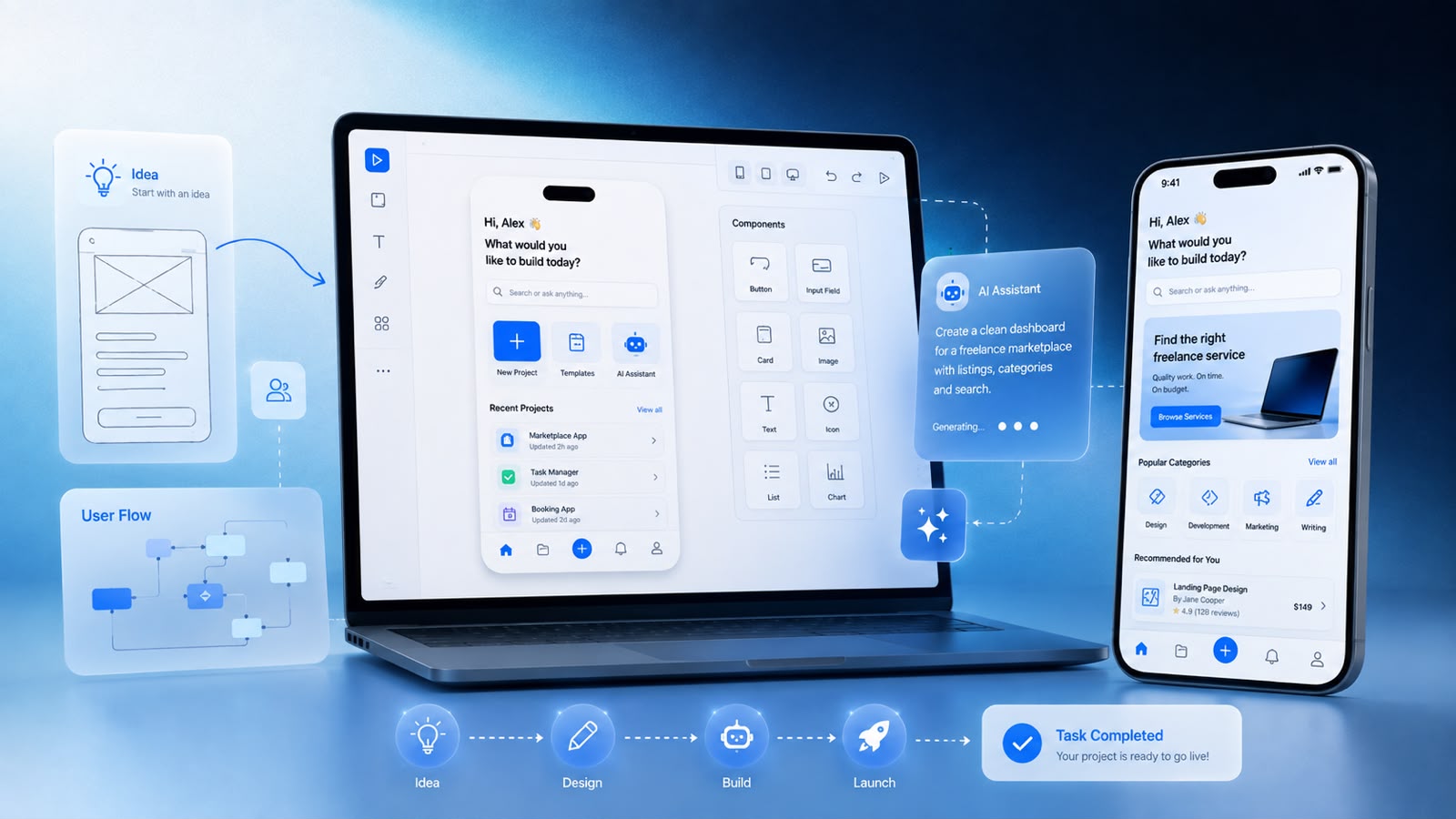
This course empowers learners to design and prototype intelligent applications using AI-assisted platforms. Starting with user research and interaction mapping, learners will apply structured design principles to define flows, interfaces, and behaviors aligned with user needs.


They will then translate these conceptual plans into functional prototypes using modern no-code methods — integrating AI to simulate logic, streamline interactions, and adapt designs based on feedback. The course bridges design intent and intelligent execution, helping learners go from static screens to responsive prototypes without needing to write code.

DURATION/SCHEDULE: 4-Day | 21Hrs

GRANTS AVAILABLE: SWDA, SFC, PSEA, UTAP

COURSE CODE:TGS-2025060917

MODE OF DELIVERY: Classroom Facilitated Training

MEDIUM OF INSTRUCTION AND ASSESSMENT: Assignments and Project

COURSE START DATE: TBC

SOFTWARE TAUGHT: Open Office, AI Tools (ChatGPT, Gemini etc.)

HARDWARE REQUIREMENTS: Windows/Mac Laptop no older than 2017

AWARD: Statement of Attainment and Certificate of Completion

ENTRY REQUIREMENTS: Applicants must be at least 18 years old with N Level education, English proficiency, and WPLN Level 6 or above. Basic computer skills and ability to use word processing and presentation software are required; no prior work experience needed.

INSTRUCTORS

Rajesh Chakravarthy has worked in digital art, design and technology for 18 years, nine of them as an educator in creative media and tech schools. As Academic Director at MAGES Institute, he leads the school's work in artificial intelligence and immersive technology. Rajesh specialises in applying AI to real-world creative and business workflows, from generative AI tools for content production to AI-driven automation. He is also a veteran AR/VR developer and an Unreal Engine Authorised Instructor. His work sits where design, technology and business meet, through ventures in prototyping, product development and education. His students have gone on to careers with prominent companies around the world.

Rajesh Chakravarthy has worked in digital art, design and technology for 18 years, nine of them as an educator in creative media and tech schools. As Academic Director at MAGES Institute, he leads the school’s work in artificial intelligence and immersive technology.

Rajesh specialises in applying AI to real-world creative and business workflows, from generative AI tools for content production to AI-driven automation.

He is also a veteran AR/VR developer and an Unreal Engine Authorised Instructor. His work sits where design, technology and business meet, through ventures in prototyping, product development and education. His students have gone on to careers with prominent companies around the world.

Rajesh Chakravarthy

Academic Director | AI & Immersive Technology Specialist

Thomas O'Dell brings more than 25 years of experience in information technology and large-scale systems. At ICONIX International and Delcan Corporation in Toronto, Canada, he played a key role in developing the Automatic Fare Collection System for the Taiwan High Speed Rail in Taipei, a complex, high-volume automated system serving millions of passengers.

Today he specialises in AI and intelligent automation, applying that systems background to how organisations design and deploy AI-driven workflows.

Thomas has taught subjects including games programming at several Singapore institutions, and his industry experience shapes both his corporate training and his academic teaching.

Thomas O’Dell brings more than 25 years of experience in information technology and large-scale systems. At ICONIX International and Delcan Corporation in Toronto, Canada, he played a key role in developing the Automatic Fare Collection System for the Taiwan High Speed Rail in Taipei, a complex, high-volume automated system serving millions of passengers.

Today he specialises in AI and intelligent automation, applying that systems background to how organisations design and deploy AI-driven workflows.

Thomas has taught subjects including games programming at several Singapore institutions, and his industry experience shapes both his corporate training and his academic teaching.

Thomas O’Dell

Adjunct Lecturer | AI & Systems Automation Specialist

Nanda Ye Aung brings extensive experience across the IT and education industries, especially in 3D graphic animation, game programming and game development. He has worked in the United States, India and Singapore.

His background in game programming gives him a practical grounding in agent behaviour and decision systems — the behaviour trees, state machines and rule-based logic that let software decide what to do next. He applies that foundation to AI systems.

Nanda is a Unity Certified Developer and an Unreal Engine Authorised Instructor, and holds certifications from Microsoft and Oracle. His clear communication makes him a valued lecturer at MAGES.

Nanda Ye Aung brings extensive experience across the IT and education industries, especially in 3D graphic animation, game programming and game development. He has worked in the United States, India and Singapore.

His background in game programming gives him a practical grounding in agent behaviour and decision systems — the behaviour trees, state machines and rule-based logic that let software decide what to do next. He applies that foundation to AI systems.

Nanda is a Unity Certified Developer and an Unreal Engine Authorised Instructor, and holds certifications from Microsoft and Oracle. His clear communication makes him a valued lecturer at MAGES.

Nanda Ye Aung

Lecturer | AI Systems & Real-Time Technology

TOPICS COVERED

Define

  • Explore user needs and digital opportunities
  • Define app goals and functionality
  • Study existing apps to identify gaps
  • Document requirements clearly (PRD)


Design

  • Shape ideas into interface concepts
  • Map user flows and interactions
  • Plan screens, feedback, touchpoints
  • Design for accessibility

Build

Turn your PRD into a working prototype with AI
Test and document improvements
Refine based on real feedback

LEARNING OUTCOMES
  • Analyse user needs and propose purposeful application concepts by assembling requirements, justifying design decisions, and creating GUI designs aligned with user interface design principles
  • Identify information flows and structure interactive flow components by crafting user interaction content and materials based on user needs and user interaction logic.
  • Construct and refine application prototypes using technical components and AI-powered tools by testing functionality, evaluating effectiveness according to metrics, and documenting all design changes.
Fees
Singaporeans 21 to 39 Yrs
Course Fee (Inclusive 9% of GST)
$1635.00
SWDA Grant @ 50%
$750.00
SFC (Based on Available Bal.)
-
PSEA (Based on Eligibility & Availability)
-
Amount Payable
$885.00
Singaporeans 40 Yrs & Above
Course Fee (Inclusive 9% of GST)
$1635.00
SWDA Grant @ 70%
$1050.00
SFC (Based on Available Bal.)
-
PSEA (Based on Eligibility & Availability)
-
Amount Payable
$585.00
Permanent Residents (PR)
Course Fee (Inclusive 9% of GST)
$1635.00
SWDA Grant @ 50%
$750.00
SFC (Based on Available Bal.)
-
PSEA
-
Amount Payable
$885.00
Company Sponsorship Available (SMEs, MNCs, Government Agencies)
SFEC Grant Claimable (for eligible companies)
Customised Private Class Proposals Available to Suit Your Company’s Needs and Learning Outcomes
SFC
All Singaporeans aged 25 years and above can use their Skills Future Credit to fully offset the remaining fees. Please check your Skills Future Credit balance before applying.
PSEA
All Singaporeans can utilise their Post Secondary Education Fund for payment of course fees upto the age of 31. More information can be found HERE
SFEC
SkillsFuture Enterprise Credit (SFEC) is a government grant that helps eligible Singapore companies offset up to 90% of out-of-pocket costs for enterprise and workforce transformation. It supports approved training programmes, job redesign, consultancy, and productivity projects.

More info:
SkillsFuture Singapore (SFEC page)
Business Grants Portal (BGP)

FAQs

What is this course about?

Go from app idea to working prototype — without writing code. You’ll learn to define what you’re building, design the experience, and use AI tools to bring it to life.

Do I need coding experience?

No. The course uses no-code platforms and AI-assisted tools. No programming knowledge is required – if you can describe your idea clearly, you can prototype it.

What tools are used?

No-code platforms and AI prototyping tools. Specific tools may evolve, but the process — from PRD to prototype — stays relevant.

Is this suitable for beginners?

Yes. No app development or coding background needed. Basic computer skills are enough.

Will I build a complete app?

You’ll build a working prototype — functional enough to test, demo, and validate. Not production-ready, but real enough to show what you’re building.

Does it cover AI features like chatbots?

Yes. You’ll explore how to integrate AI chat and basic automation into your prototypes.

Is this relevant for startups or business teams?

Very. If you need to test an idea fast before committing to developers, this is the course. Prototype first, build later.

What's the assessment?

You’ll design, build, and refine your own app prototype using no-code and AI tools. Real project, not just theory.

What certification will I receive?

Certificate of Completion from MAGES, issued upon successful completion of the assessment.

SPEAK TO AN ADVISOR

Need guidance or course recommendations? Let us help!

    Mages Whatsup WhatsApp Now