









Why Traditional 3D Artists Are Struggling to Stay Relevant
26 February, 2026
Why traditional 3D artists are struggling in the real-time era. Discover how virtual production and Unreal Engine are reshaping industry expectations.
Over the years, the 3D artist had toiled to ensure the accuracy of their creation, the detail of their assets, the quality of their renders, and the optimization of their work despite lengthy render times.
The element was rewarded with versatility, patience, and technical skill. Those are models that are now on the firing line.
Studio is not reducing its quality standards; it is adjusting how and when quality will be provided. To take what has always taken hours or even days to complete and complete it in a few minutes, even live on set, is anticipated.
This brings an apparent contradiction:
- The content is in demand.
- The quality expectations are high.
- The timeframes are shortening rapidly.
Consequently, the meaning of the term ‘valuable 3D artist’ is changing. It is no longer a question of how well you can produce, but of how fast you can change, repeat, and act in real time.
Many traditional artists are not struggling because of outdated skills. All they are going through is that the environment surrounding those skills has changed.
Where Traditional 3D Artists Are Struggling
The challenge is not that traditional 3D artists lack skill. The issue is that their strengths are aligned with a workflow that is no longer central to how production operates today.
In offline pipelines, time was built into the process. Artists could iterate, refine, and correct outputs across multiple stages. In real-time environments, that buffer disappears.
The expectation shifts from perfecting over time to getting it right in the moment.
This is where the gap becomes visible.
1. Speed vs Perfection
Traditional workflows reward detail and polish. Real-time environments reward responsiveness.
- Artists are used to refining outputs over multiple passes
- Real-time setups require immediate adjustments
- Delays are visible instantly during production
The difficulty is not in creating quality—it is in maintaining that quality without the luxury of time. What was once a strength becomes a constraint.
2. Asset Creation vs System Integration
Creating assets is only one part of modern production. The expectation now extends to how those assets behave inside a live system.
- Traditional roles focus on modeling, texturing, and rendering
- Real-time workflows require understanding engine behavior
- Factors like scale, lighting interaction, and performance become critical
An asset that appears correct in isolation may fail in a real-time environment if it is not properly optimized or integrated. The role is no longer just about creation—it is about fitting within a system.
3. Lack of Real-Time Decision-Making Experience
Offline workflows allow time to think, test, and refine. Real-time environments compress that process into seconds.
- Directors expect instant changes
- Teams rely on immediate execution
- There is little room for trial-and-error
For many artists, the challenge is not technical, it is situational. Making decisions under pressure, with multiple stakeholders watching, requires a different kind of readiness.
4. Dependency on Post-Production
Traditional pipelines assume that imperfections can be corrected later. Post-production acts as a safety net.
- Lighting inconsistencies can be fixed in post
- Compositing can resolve mismatches
- Errors are not always critical during production
In virtual production, that safety net is reduced.
- What appears on screen is often final
- Mistakes must be corrected immediately
- Delays impact the entire crew
This removes the fallback that many workflows depend on. The responsibility shifts forward, from post-production to production itself.
Why This Gap Exists
This gap did not emerge because artists failed to adapt. It exists because the system around them evolved faster than the way they were trained or exposed to real-world environments.
1. Education Still Focuses on Offline Pipelines
Most training programs continue to prioritize:
- High-quality rendering
- Asset creation workflows
- Software proficiency in isolation
These skills remain valuable, but they do not reflect how production environments are now structured. The missing layer is real-time execution within a connected system.
2. Limited Exposure to Production Environments
Many artists learn in controlled conditions where complexity is reduced.
- Individual projects
- Predictable workflows
- No real-time pressure
This creates a gap when transitioning into:
- Live production environments
- Multi-team coordination
- Time-sensitive decision-making
The difference is not just technical—it is environmental.
3. Misunderstanding of Industry Direction
There is still a belief that real-time workflows are optional or niche. This delays adoption at an individual level.
- Real-time tools seen as secondary
- Virtual production perceived as specialized
- Offline pipelines assumed to remain dominant
In reality, real-time workflows are becoming a core layer, not a replacement, but an expectation.
4. Tool-Centric Learning vs Workflow Understanding
A significant part of the gap comes from how learning is approached.
- Focus on mastering software features
- Emphasis on portfolio outputs
- Learning in isolation
Whereas the industry is shifting toward:
- Understanding how systems connect
- Working within collaborative pipelines
- Executing decisions in real time
The difference is subtle but critical: knowing tools vs understanding workflows.
What Changed: From Offline Rendering to Real-Time Production
The biggest shift is not just technological-it is workflow-driven.
Earlier, production pipelines were built around separation:
- Creation → Rendering → Post-production
- Each stage had its own timeline
- Revisions were expected to take time
Today, that separation is collapsing.
With real-time engines like Unreal, creation and output are happening simultaneously. What you build is what you see instantly.
More importantly, this is no longer limited to individual workstations. It is happening in collaborative environments, often during live production.
Traditional Workflow (Offline Rendering)
- Artists build assets and scenes
- Rendering can take minutes to hours per frame
- Final quality is achieved in post-production
- Changes require re-rendering and delay timelines
Modern Workflow (Real-Time Production)
- Scenes are rendered instantly inside real-time engines
- Changes are visible immediately
- Decisions happen during production, not after
- Output is often captured directly in-camera
What’s Driving This Shift
- Faster production cycles
Studios aim to reduce delivery timelines while maintaining quality - Virtual production adoption
LED volumes and real-time environments are being used across film, ads, and OTT - Reduction in post-production dependency
Industry estimates suggest 30–50% reduction in post timelines with in-camera workflows (Epic Games VP insights) - Rising content demand
Reports like PwC’s Global Entertainment & Media Outlook show continuous growth in content production across platforms
Industry Reality: What Studios Actually Need Today
The gap becomes visible when you look at how studios are operating today, especially in markets like Singapore, where the industry is actively shifting toward technology-led production.
Singapore’s media industry is not small or experimental. It is a structured, government-supported ecosystem with strong digital adoption. The sector is projected to reach around USD 3.3 billion in revenue, driven by streaming, digital media, and content platforms.
At the same time, the broader media and entertainment industry in Singapore recorded approximately USD 4.8 billion in revenue in 2023, showing steady scale and investment in content production.
What makes this important is not just the size, but the direction.
Singapore is actively positioning itself as a content innovation hub in Asia, with strong government backing (IMDA) and increasing focus on emerging production technologies like virtual production.
In fact, IMDA highlights that virtual production is expected to become a mainstream approach in film and television production, with studios moving toward real-time, in-camera workflows.
How Hiring Expectations Have Changed
| Quality of final renders | Ability to deliver in real time |
| Individual contribution | Team-based execution |
| Work completed in stages | Work happening simultaneously |
| Fixing issues in post | Preventing issues during production |
What Studios Prioritize Today
Studios are increasingly looking for professionals who can operate within real-time production environments, where delays are immediately visible, and decisions are made on the spot.
The expectation is no longer limited to producing high-quality output—it is about contributing to a workflow where multiple systems and teams function simultaneously.
This shift reflects how production itself has changed. In virtual production setups, environments, lighting, and camera perspectives are often finalized during the shoot rather than deferred to post-production.
Epic Games highlights that virtual production allows filmmakers to make creative decisions in real time on set, fundamentally changing how work is executed.
At the same time, increasing content demand is putting pressure on timelines. PwC’s Global Entertainment & Media Outlook points to continued growth in streaming and digital content, which is driving the need for faster, more efficient production cycles.
As a result, studios prioritise professionals who can:
- Work within real-time environments without slowing production
Delays affect the entire crew, not just one task, making execution speed critical - Understand how systems interact (engine, camera, lighting)
Outputs are dependent on how well multiple systems stay aligned in real time - Coordinate with multiple teams during execution
Changes must be implemented across departments without breaking continuity - Respond quickly to changes on set
Creative decisions are made live and require immediate execution - Troubleshoot issues as they occur
With reduced reliance on post-production, problems must be resolved during the shoot itself
How the Role of a 3D Artist is Evolving
The role of a 3D artist is not being replaced-it is being repositioned within the production workflow.
Earlier, most contributions occurred before production began. Artists created assets, refined scenes, and delivered outputs that would move downstream into rendering and post-production. The responsibility ended at delivery.
That boundary is no longer clear.
With real-time production, the expectation extends beyond creation. The work is not considered complete once it is built; it needs to remain adaptable throughout production.
How the Nature of Work is Changing
The shift is subtle but important:
- Assets are no longer static, they must perform correctly in real-time environments
- Scenes are not locked, they continue to evolve during production
- Outputs are not delayed, they are evaluated instantly
This changes the role from a content creator to a live contributor within a system.
Where the Role Expands
A 3D artist is now expected to operate closer to the production layer:
- Making adjustments based on live feedback
- Ensuring assets are optimized for real-time performance
- Working alongside camera and lighting teams
- Maintaining consistency across rapidly changing conditions
The work becomes less about completing tasks and more about supporting continuity during execution.
How the Role is Shifting Structurally
Earlier Role |
Evolving Role |
Focus on asset delivery |
Focus on asset performance in real time |
Work completed before production |
Work continues during production |
Iteration happens over time |
Iteration happens instantly |
Limited interaction with other teams |
Continuous coordination across teams |
The core skill set does not lose value-but it is no longer sufficient on its own.
The role now sits closer to where decisions are made, which means the expectation is not just to create but to adapt, respond, and sustain output in real-time conditions.
What Skills Are Now Required
The shift in role naturally leads to a shift in skills. What made a strong 3D artist earlier—modeling, texturing, and lighting still matter.
But it now sits alongside a new layer of capability: working within real-time, interconnected systems.
This is where many artists feel the gap. The issue is not a lack of talent, but a lack of alignment with how production now operates.
1. Real-Time Engine Understanding (Not Just Tool Usage)
Knowing Unreal Engine is no longer about navigation or features. It is about understanding how scenes behave in real time.
- How does lighting update dynamically
- How assets impact performance (FPS, memory)
- How environments respond to camera movement
Example:
Games like Cyberpunk 2077 (after updates) and Fortnite use Unreal Engine to deliver highly dynamic environments where lighting, reflections, and assets respond instantly. This same principle applies in virtual production—what you build must hold up in motion, not just in still frames.
2. Performance Thinking, Not Just Visual Quality
In offline workflows, quality was the priority. In real-time, quality must be balanced with performance.
- High-poly assets can break real-time scenes.
- Heavy textures can slow down rendering.
- Poor optimization affects the entire system.
Artists need to think in terms of:
- Efficiency
- Load management
- Real-time responsiveness
3. Understanding of Virtual Production Pipelines
It is no longer enough to create assets. Artists need to understand how those assets move through a production system.
- How Unreal integrates with LED walls (nDisplay)
- How camera tracking affects perspective
- How lighting interacts between real and virtual elements
Without this, the work remains incomplete from a production standpoint.
4. Real-Time Problem Solving
In traditional workflows, problems are solved over time. In real-time environments, they must be solved instantly.
- Scene not aligning with camera → fix immediately.
- Lighting mismatch → adjust live
- Asset glitch → resolve without delay.
This requires a different mindset:
- Quick decision-making
- Practical problem-solving
- Comfort under pressure
5. Collaboration in Live Environments
The role is no longer isolated. Artists now work closely with:
- Directors
- Camera operators
- Lighting teams
- Technical operators
This means:
- Clear communication
- Understanding creative intent
- Executing changes without breaking workflow
How 3D Artists Can Stay Relevant
To cope with this change, one does not need to start over. It involves repositioning available skills to fit real-time production setups.
- Shift from Output Thinking to Workflow Thinking
Conventional work processes are about the end render, which is measured at the end. In real-time settings, such a distinction is lost. The work is evaluated throughout its creation and use.
This implies that artists must not be limited to images only. Assets are no longer evaluated by their appearance, but by their behavior in relation to illumination, camera movement, and system limitations.
It is no longer about completing a task, but about keeping it going through shifting conditions.
- Approach Real-Time Tools with Context, Not Isolation
Tools like Unreal Engine are required, but the strategy is more important than the tool.
It must be seen as a working environment rather than as a learning tool, like another piece of software. Scenes are not static. There is always a play of lighting, reflections, and interplay, and the changes are immediately apparent.
It is not about learning features, but about understanding how various aspects are combined during execution.
- Rediscover What a Portfolio Should Demonstrate.
An example of a conventional portfolio is one that you can make. An appropriate portfolio demonstrates that you can work.
The concept of statistical rendering is no longer sufficient. The important thing is whether your work demonstrates its performance under varying conditions and within a system.
This involves demonstrating environments that react to changes in lighting, camera movement, or real-time interaction.
- Close the Exposure Gap
Lack of exposure to production-like environments is one of the greatest challenges.
The majority of learning occurs in controlled settings with limited complexity and time pressure.
The disconnect is evident when transitioning to areas with a number of systems related to each other and decisions being made in a hurry.
To overcome this gap, there is a need to have an experience that demonstrates how production works, rather than how the tools work independently.
- Build Speed Without Compromising Judgment
Online systems cannot support long iteration times. These decisions must be fast but not irresponsible.
This is the equilibrium, speed, and awareness that make one ready. It is an experience of working in a situation where change is constant, and results are instant.
This will develop the skill of prioritizing important matters and the ability to respond without interfering with the working process.
- Reposition, Don’t Restart
Essential abilities of a 3D artist, such as lighting, composition, and spatial comprehension, should not go to waste. The difference lies in how they are applied.
They are no longer applied separately, but rather in an active, connected, and time-sensitive system. It is not necessary to replace your foundation in order to remain relevant.
It is concerning how to match it with the current mode of production.
Conclusion
The production is shifting to a real-time workflow, in which decisions are made earlier and more quickly. This brings a 3D artist closer to the element of execution rather than creation.
The opportunity for artists is to adapt their skills to survive such environments. This will favor those who can work in real time rather than provide final products.
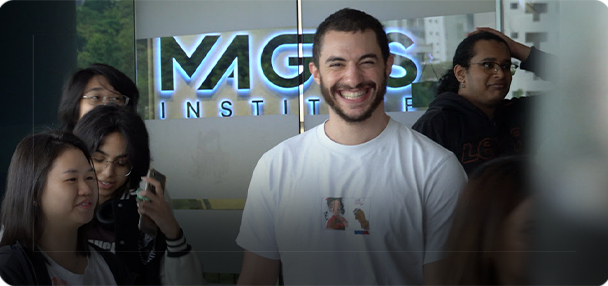
It is here that exposure is important. Simulation training platforms such as MAGES, including simulated production laboratories and real-time processes, help bridge the gap between classroom learning and real production.
Since the industry is changing, the only thing that will make it relevant is the capacity to work where decisions are made rather than when they have been made.
FAQs
- Are ordinary traditional 3D artists becoming redundant?
No. 3D skills are still in high demand. The only thing that varies is the way such skills are used. Artists must also work with real-time pipelines rather than offline pipelines.
- What is the reason behind studios moving towards real-time production?
Real-time workflows can enable faster decision-making, reduce post-production requirements, and enable on-set visualization. This helps studios save time and manage production more efficiently.
- Should I acquire Unreal Engine to remain relevant?
The concept of a real-time engine, such as Unreal, is becoming increasingly relevant not only as a tool but also as a working environment, where lighting, cameras, and assets interact in real time.
- Does virtual production mean the death of traditional VFX?
No. VFX is not being replaced by virtual production; it is altering when and how VFX work is completed. There is an increase in work being put into production at an earlier stage, rather than being dealt with all in post.
- Which is the largest skill gap of 3D artists today?
Primary skill deficiency is not technical expertise but workflow knowledge, in particular, the flexibility to perform in real-time settings where systems and teams interact.
- Is it also possible to start as a beginner in virtual production?
Yes, but the media, 3D, or digital exposure, at least to a basic level, is beneficial. Live action environments demand technical knowledge as well as pressure.
- What can I do to revise my 3D portfolio in the current industry?
It should be in your portfolio, demonstrating its ability to render real-time, i.e., interactive scenes, dynamic lighting, and an environment receptive to camera movement, not just a simple render.
- What can be done through training institutes to assist in this transition?
One issue with learning tools is their lack of connection to real production settings, and working in virtual production laboratories can bridge this gap.
Related Posts
SPEAK TO AN ADVISOR
Need guidance or course recommendations? Let us help!
